
The Tongariro National Park is a unique and dynamic environment influenced by changing weather patterns, volcanic activity, and cultural traditions. Here’s what to expect:
Weather Conditions
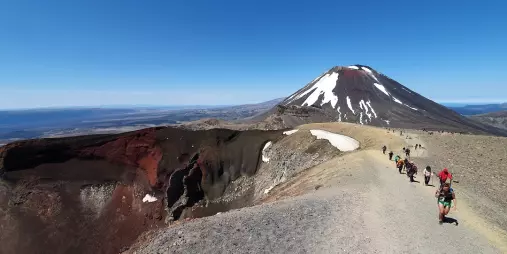
The trip runs during the warmer months, from November to April. In November, you might encounter small patches of ice or snow near the summit of Mt. Tongariro, but ice-axes and crampons are not required.
- Our guides closely monitor weather conditions before and during the trip to ensure your safety and enjoyment.
- The itinerary may be adjusted to select the best day for completing the Tongariro Alpine Crossing. For example, if Day 2 isn’t ideal, we may attempt it on Day 3 or Day 4 instead.
- In severe weather, the Department of Conservation may close the Tongariro Alpine Crossing for all walkers, including guided groups.
Volcanic Activity & Alerts
The Tongariro massif is an active volcanic area, closely monitored to ensure visitor safety.
- If Mt. Ruapehu’s volcanic alert level increases, the Tongariro Alpine Crossing remains unaffected due to its distance of 16 km from the mountain.
- Your safety is the top priority, and your guide will provide a detailed briefing each evening about the next day’s plans and explain how volcanic activity might impact the area.
Rāhui / Cultural Closure
Ngāti Hikairo ki Tūwharetoa, the local iwi (tribe), are the spiritual and cultural guardians of Mt. Tongariro.
- If a death occurs on the track, the iwi may place a rāhui (cultural closure) on the area for three days. This is a period of mourning, and visitors are asked to show respect by avoiding the track during this time.
Your safety and experience are at the heart of this trip, and our team works hard to ensure you’re well-informed and prepared for this incredible adventure.
Tours around What should I know about conditions in Tongariro National Park?


Sign up to our newsletter for special deals & exciting news.