


New Zealand’s Greatest Day Walk
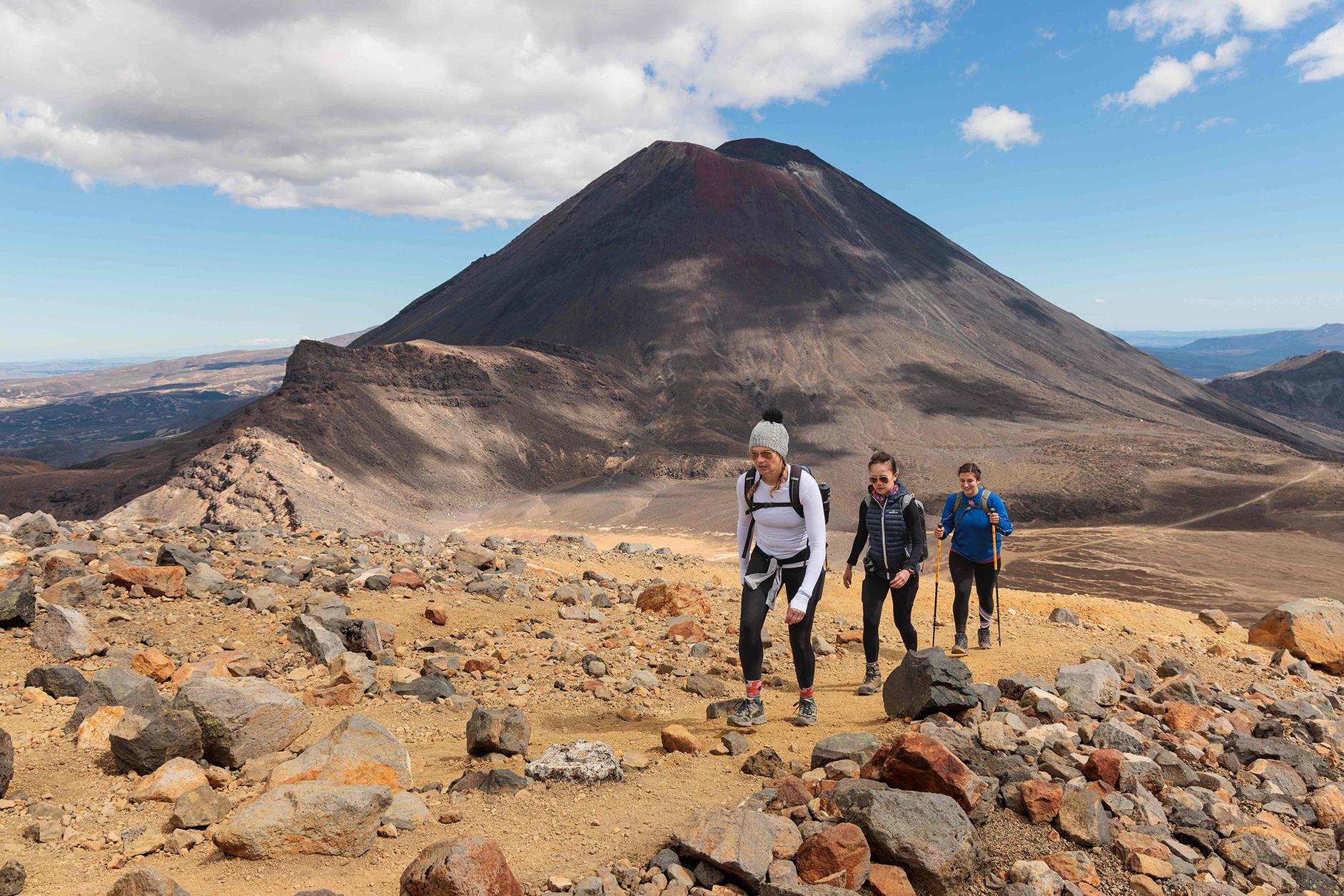
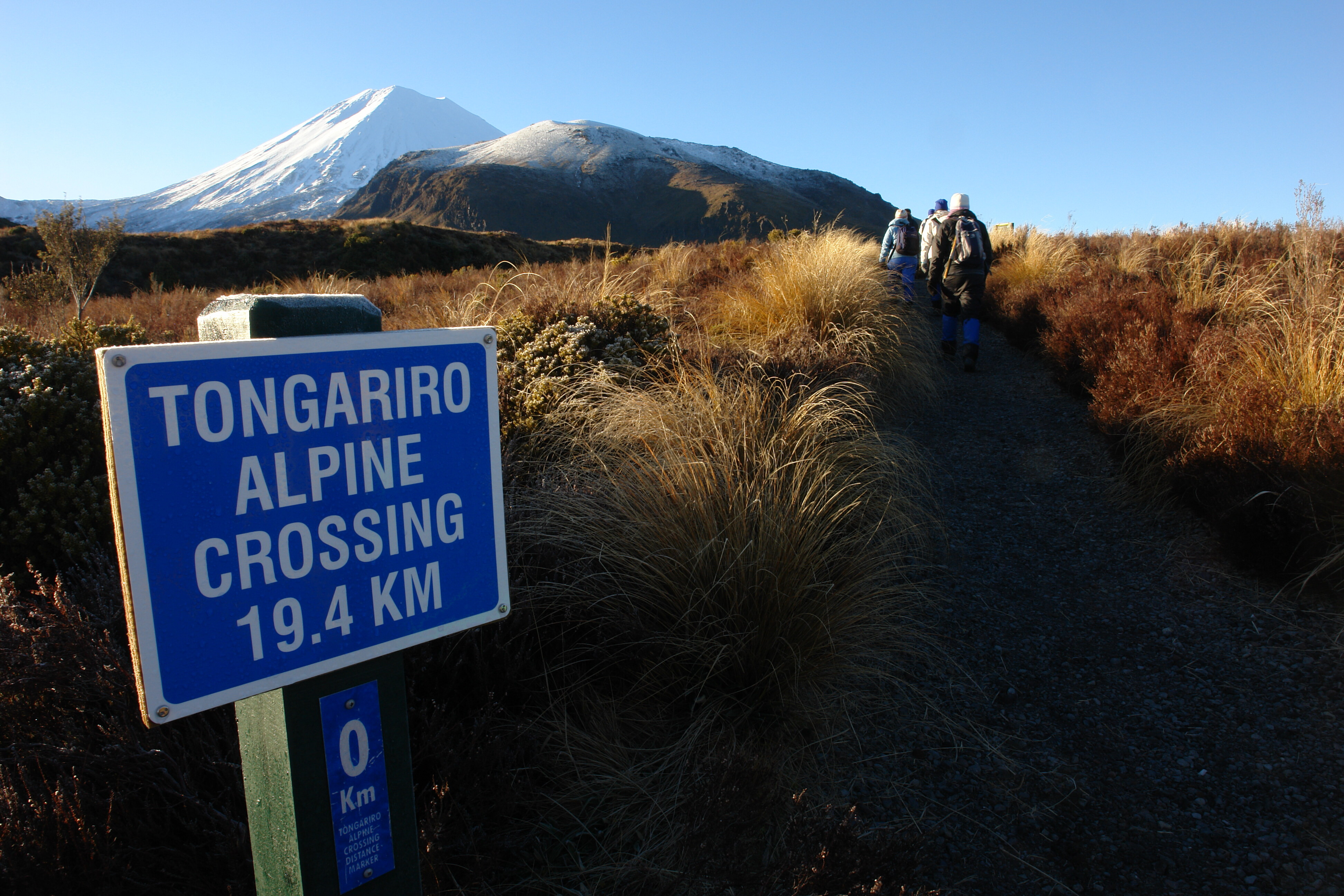
The Tongariro Alpine Crossing is widely considered New Zealand’s premier one-day hike. Located within the Tongariro National Park in the centre of the North Island, this 19.4 km track traverses a dramatic volcanic landscape.
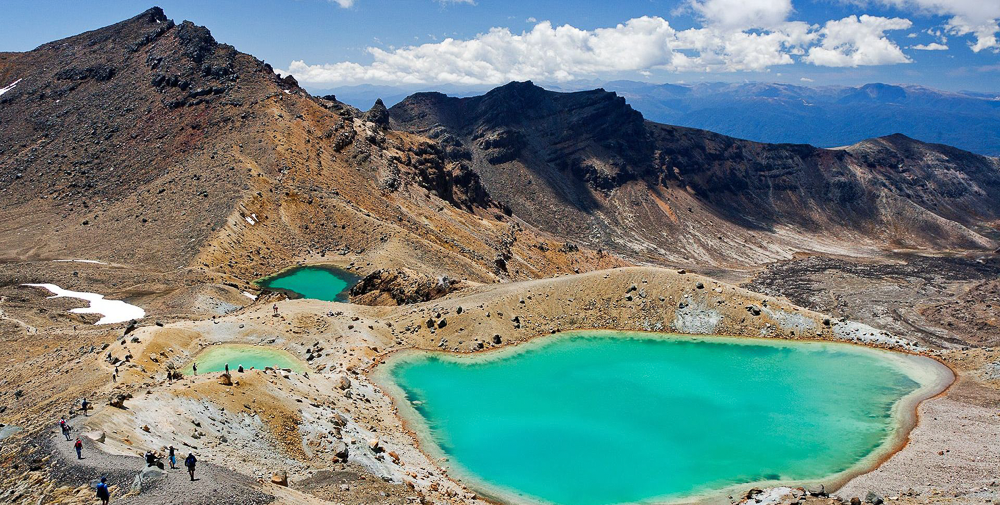
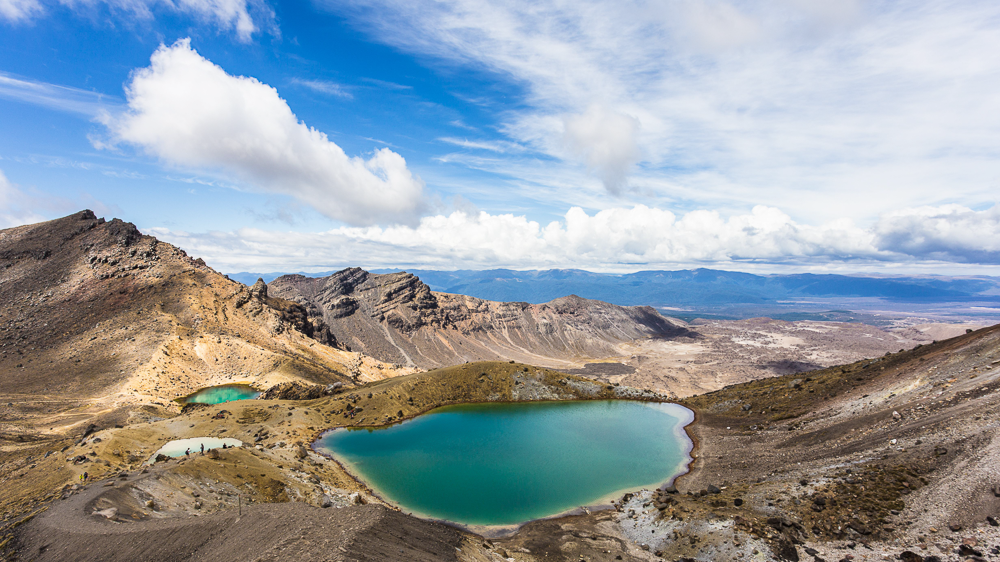
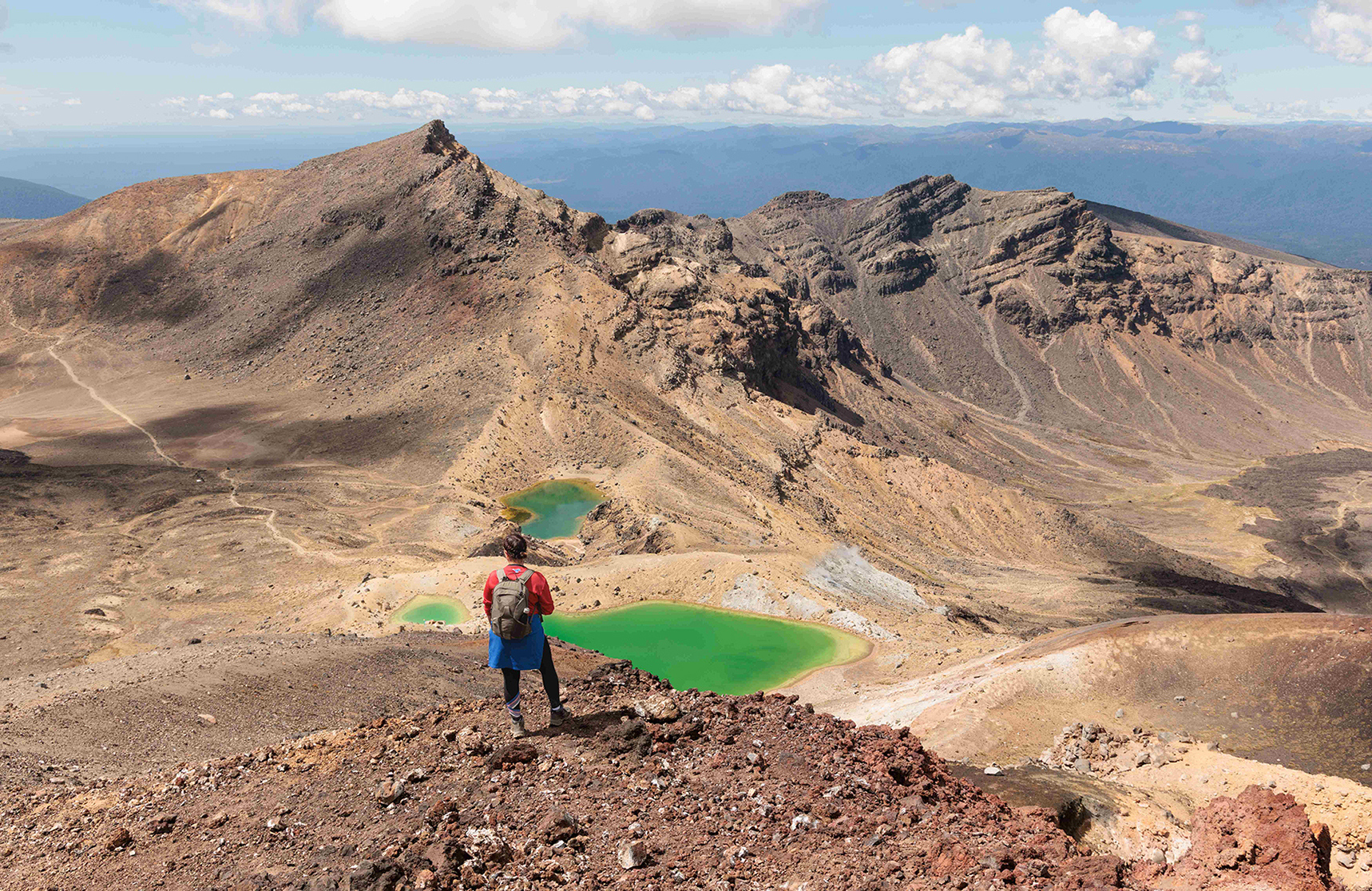
The terrain varies from ancient lava flows and steam vents to the vivid Emerald Lakes. As a UNESCO Dual World Heritage area, it is recognised for both its geological significance and its cultural importance to the Māori people.
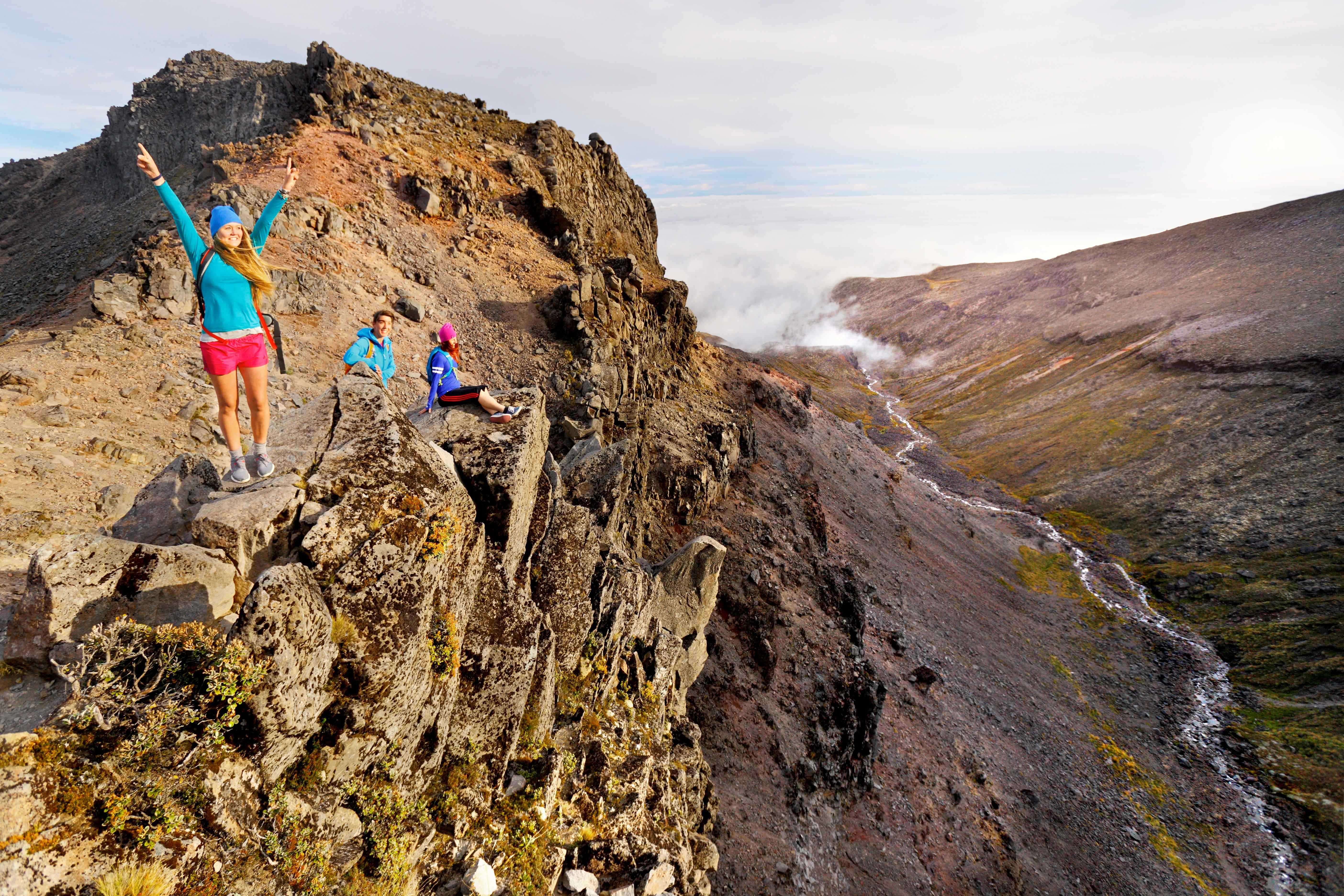
While popular, this is an alpine crossing rather than a casual walk. Weather conditions change rapidly and preparation is required.
The Crossing is an alpine environment. A sunny morning at the car park can turn into a freezing storm at the Red Crater. Preparation is not optional.
About Tongariro National Park
Tongariro Alpine Crossing: Quick Facts
one way
8-9 hours (Winter)
Tongariro National Park
(Shuttle Access Only)
(Shuttle Pickup)
1,886 metres (6,188 feet)
What You Will See on the Trail
The track passes through varied volcanic scenery that offers distinct visual highlights.
- Mt Ngauruhoe: Often recognised by international visitors as ‘Mt Doom’ from The Lord of the Rings.
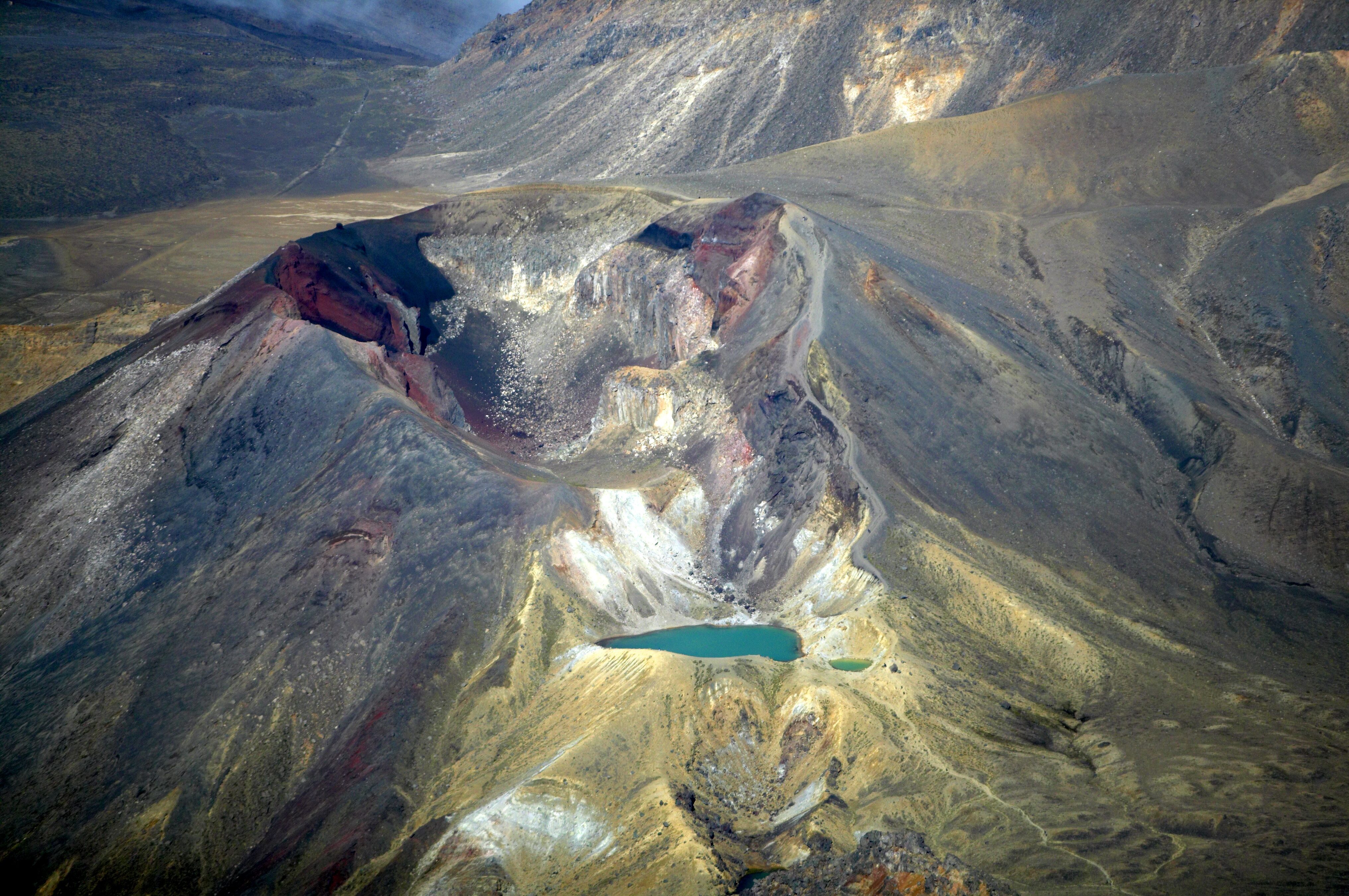
- Red Crater: The highest point of the track at 1,886 metres, offering panoramic views.
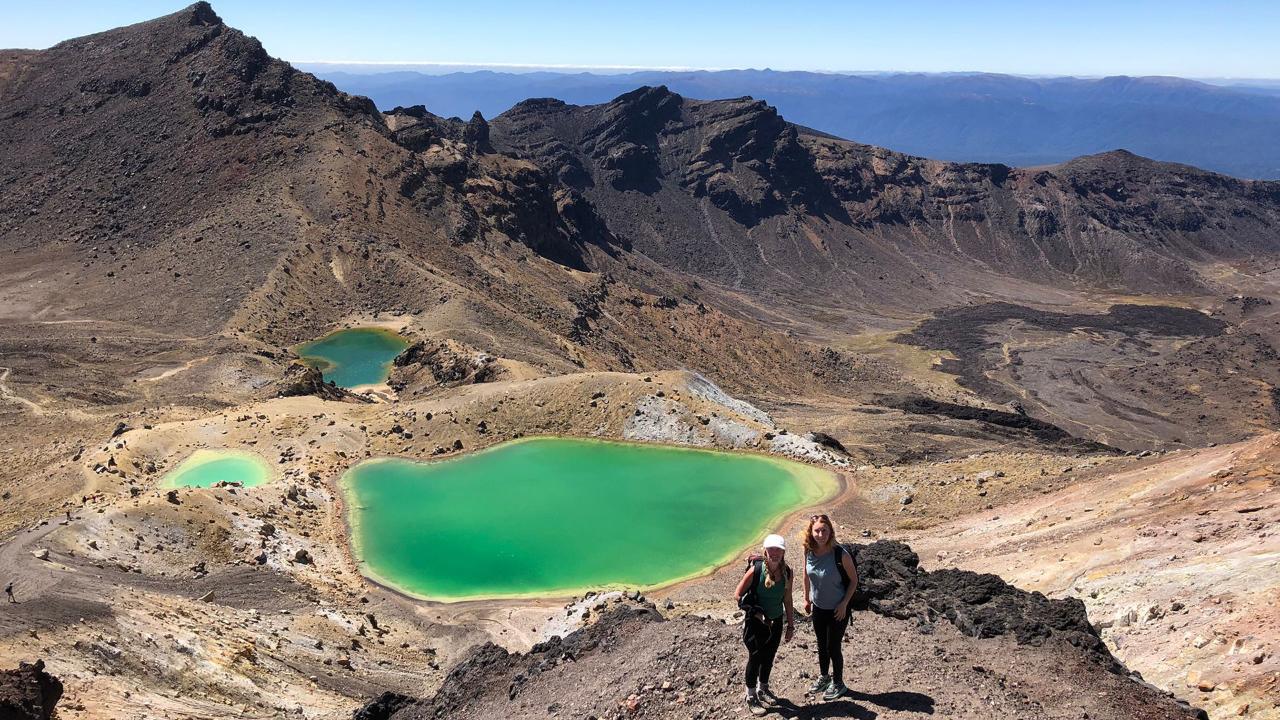
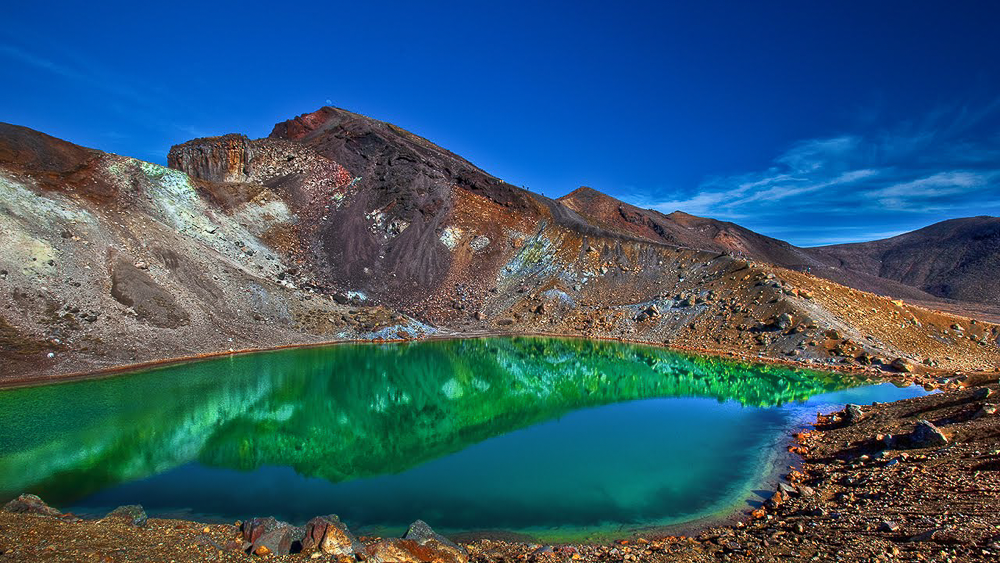
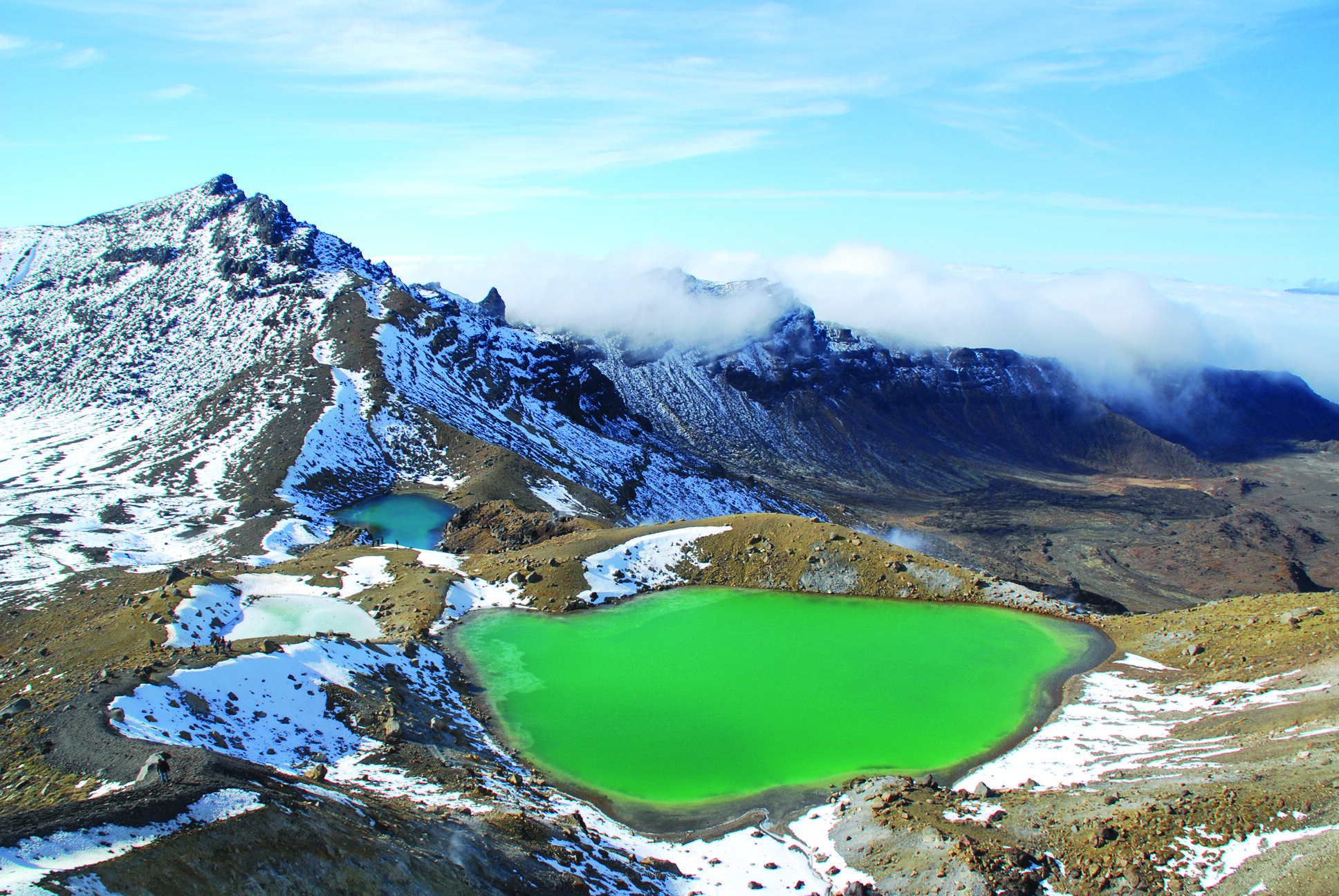
- Emerald Lakes: Ancient explosion craters filled with water coloured by dissolved minerals.
- Blue Lake: A cold, acidic lake that is tapu (sacred).
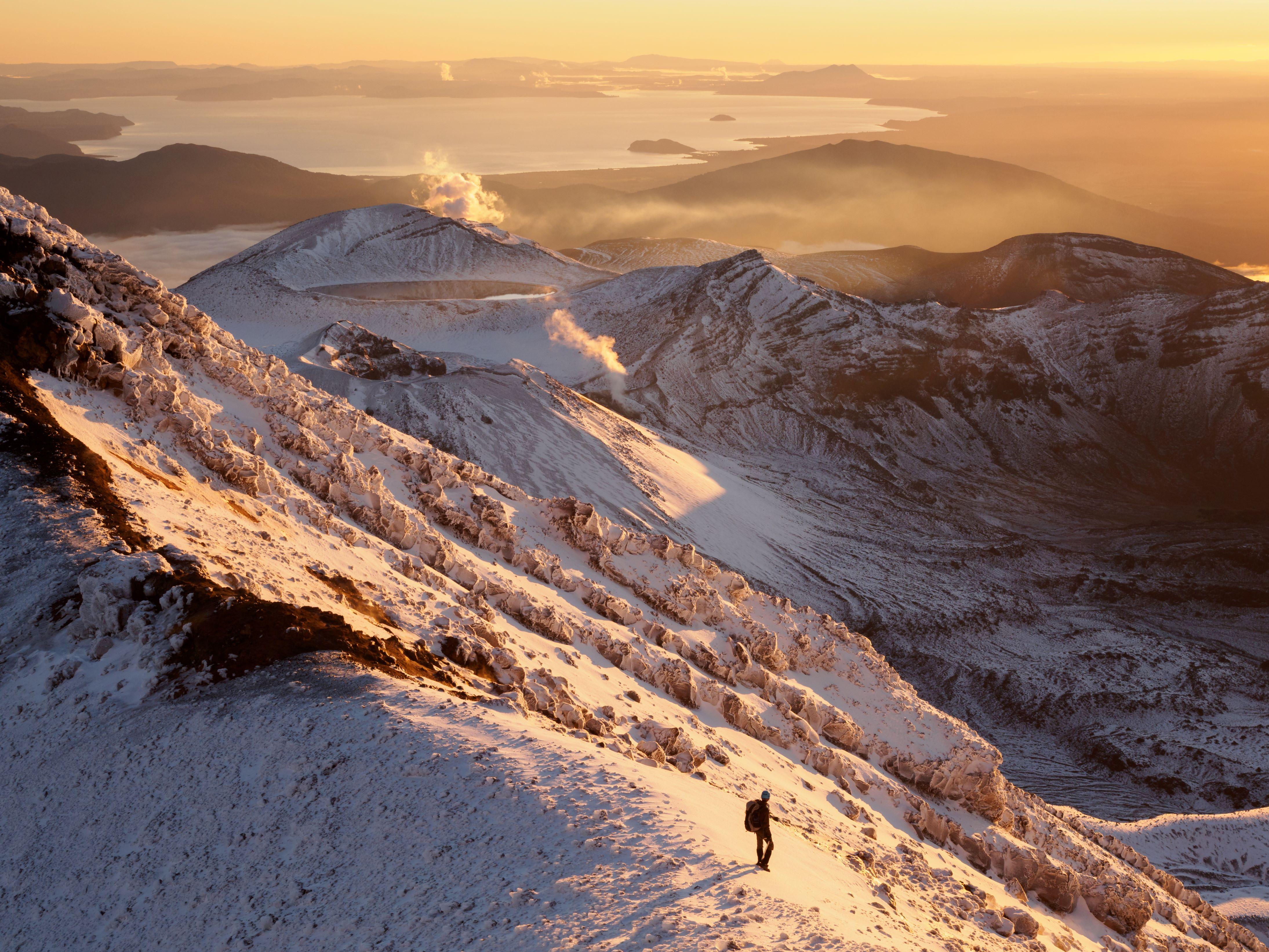
- Steam Vents: Active geothermal areas visible near the Ketetahi Shelter.
Interactive Map of the Tongariro Alpine Crossing
Map showing the 19.4km route from Mangatepōpō to Ketetahi.
Seasonality
Summer (October to April)
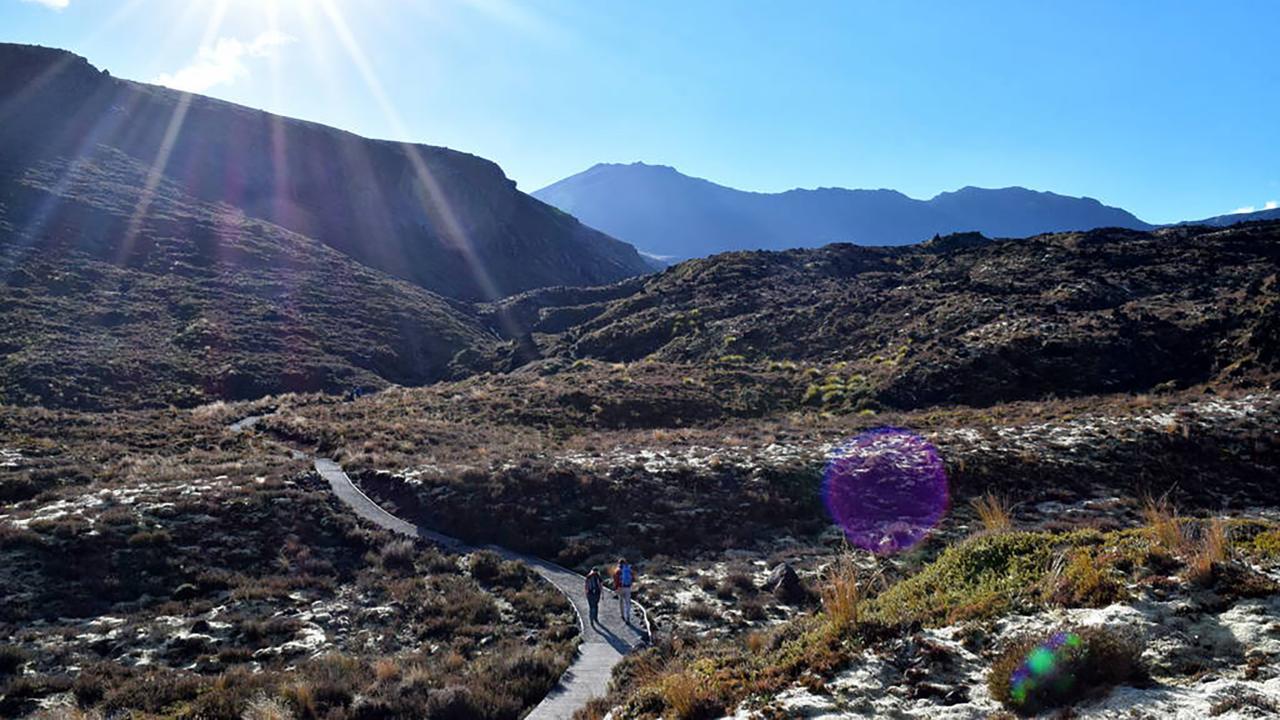
This is the most popular time to hike. The track is generally clear of snow and you will share the trail with many other hikers.
- Difficulty: Moderate to Hard.
- Requirements: Standard hiking gear. No special alpine equipment is usually needed.
Winter (May to October)
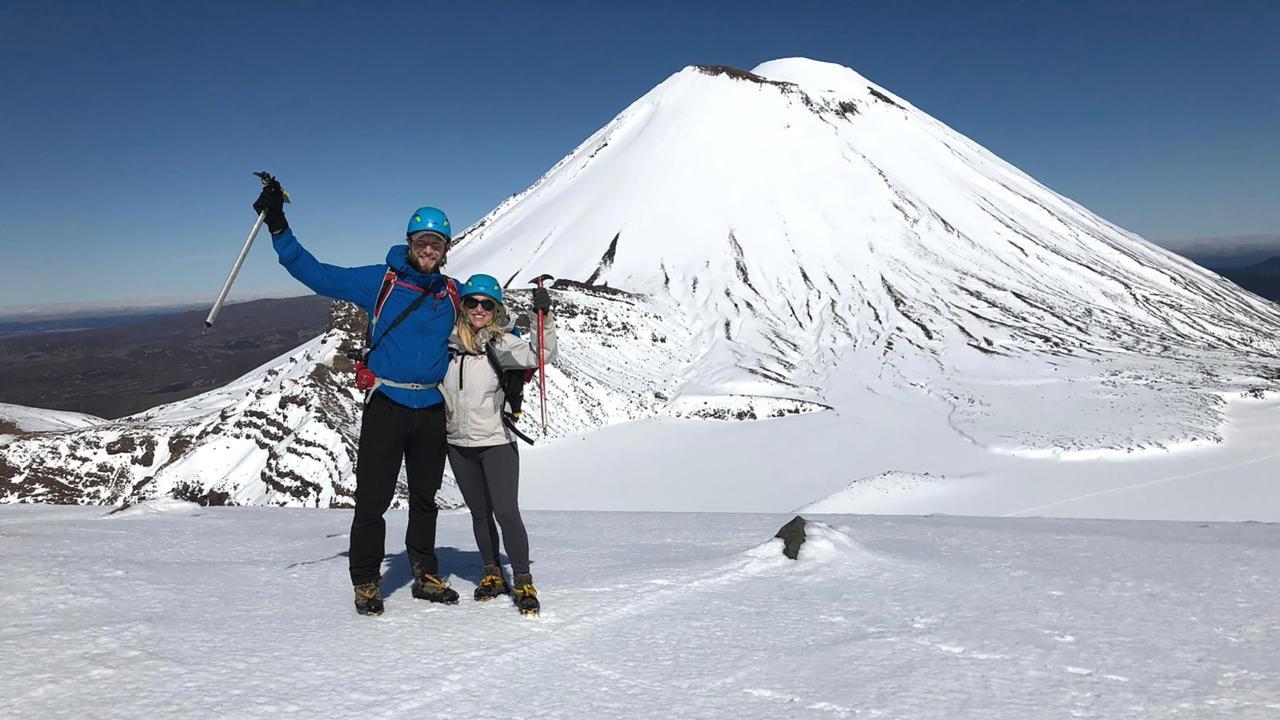
The park transforms into a snow and ice environment. The crowds disappear, providing a quieter atmosphere.
- Difficulty: High.
- Requirements: Crampons and ice axes are essential. Avalanche awareness is required.
In winter, unless you have specific alpine experience and equipment, booking a guide is strongly advised for your safety.
Preparation and Safety
Essential Gear List
Weather in alpine environments is unpredictable. Ensure you pack the following:
- Footwear: Sturdy hiking boots with ankle support.
- Clothing: Merino or thermal base layers, fleece mid-layer, and a waterproof/windproof jacket. No denim or cotton.
- Food and Water: At least 2–3 litres of water and high-energy food.
- Sun Protection: Sunglasses and sunscreen (UV is high at altitude).
- Emergency: Fully charged phone, personal locator beacon (recommended), and a head torch.
Getting to the Start
- Taupō: 1 hour 15 minutes drive.
- Tūrangi: 40 minutes drive.
- National Park Village: 20 minutes drive.
- Shuttle Booking: Shuttles must be booked in advance. They will pick you up from designated hubs or the Ketetahi car park and drop you at the Mangatepōpō start.
Cultural Respect (Manaaki)
The peaks and waterways within the park are sacred to the local iwi, Ngāti Tūwharetoa.
- Do not touch the water: Avoid touching or entering the Emerald Lakes and Blue Lake.
- Respect the summit: Do not climb the summits of Mt Ngauruhoe or Mt Tongariro.
- Pack it out: There are no rubbish bins on the track. Take all waste with you.

Book Your Experience
For winter crossings or simplified summer logistics, we recommend the following options.