

Aurora Australis: Seeing the Southern Lights in New Zealand
The stars are reliable. You can step outside on any clear night in New Zealand, look up, and know exactly what you will find: the Southern Cross, the Milky Way, the quiet vastness of the universe.
The Aurora Australis is none of those things. It is wild, temperamental, and untamed.
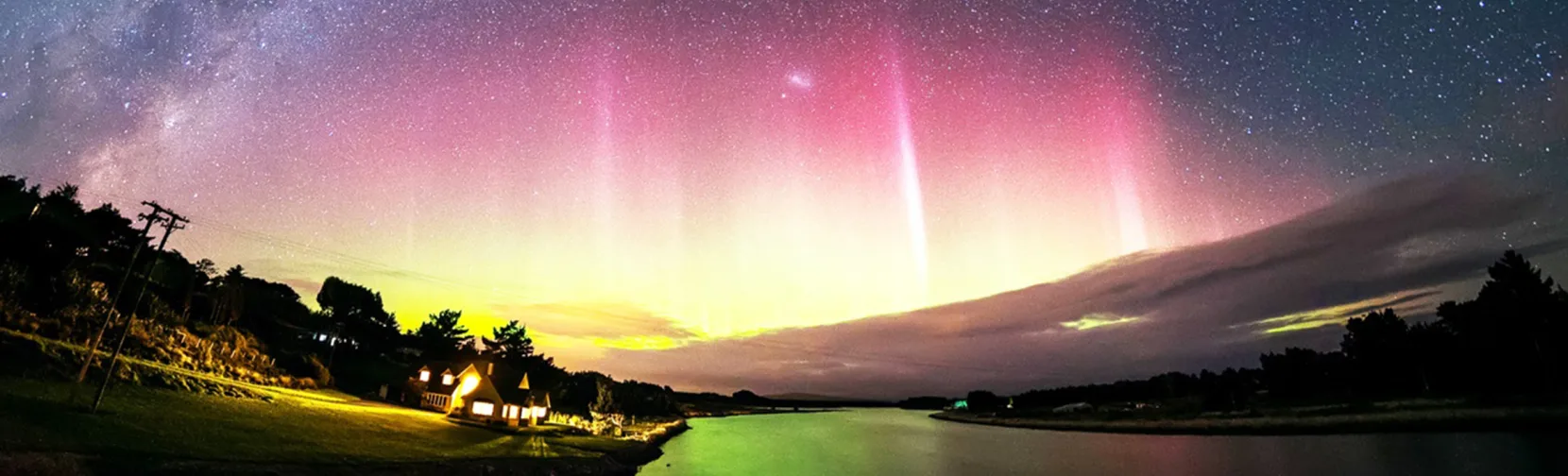
You do not visit the aurora like a static landscape; you witness it as a dynamic solar event. It is a collision of magnetic fields and solar winds that lights up the upper atmosphere in pinks, reds, and pale green.
While the Northern Lights are known for dramatic overhead curtains, the Southern Lights in New Zealand tend to be more mysterious. They rise from the bottom of the world like a slow-burning fire. Seeing them requires more than a dark sky. It takes patience, timing, and a little luck.
If you are hoping to trade familiar constellations for a moving sky, here are the essentials for planning an aurora hunt in New Zealand.
Why New Zealand is One of the Best Places to See the Southern Lights
Unlike the Northern Lights, where crowds often gather, the Aurora Australis reveals itself over quiet coastlines, empty fields, and protected Dark Sky Reserves. New Zealand sits directly beneath the auroral oval (the magnetic ring circling the South Pole), which means that during certain seasons and solar cycles, the lights can appear far brighter than travellers expect.
For many, the surprise is not only that the aurora is visible. It is the sheer scale of the sky when the solar activity peaks.
Best Places to See the Aurora Australis in New Zealand
Note: The Aurora Australis in NZ is sporadic and unpredictable. Even the best locations offer a chance, not a guarantee.
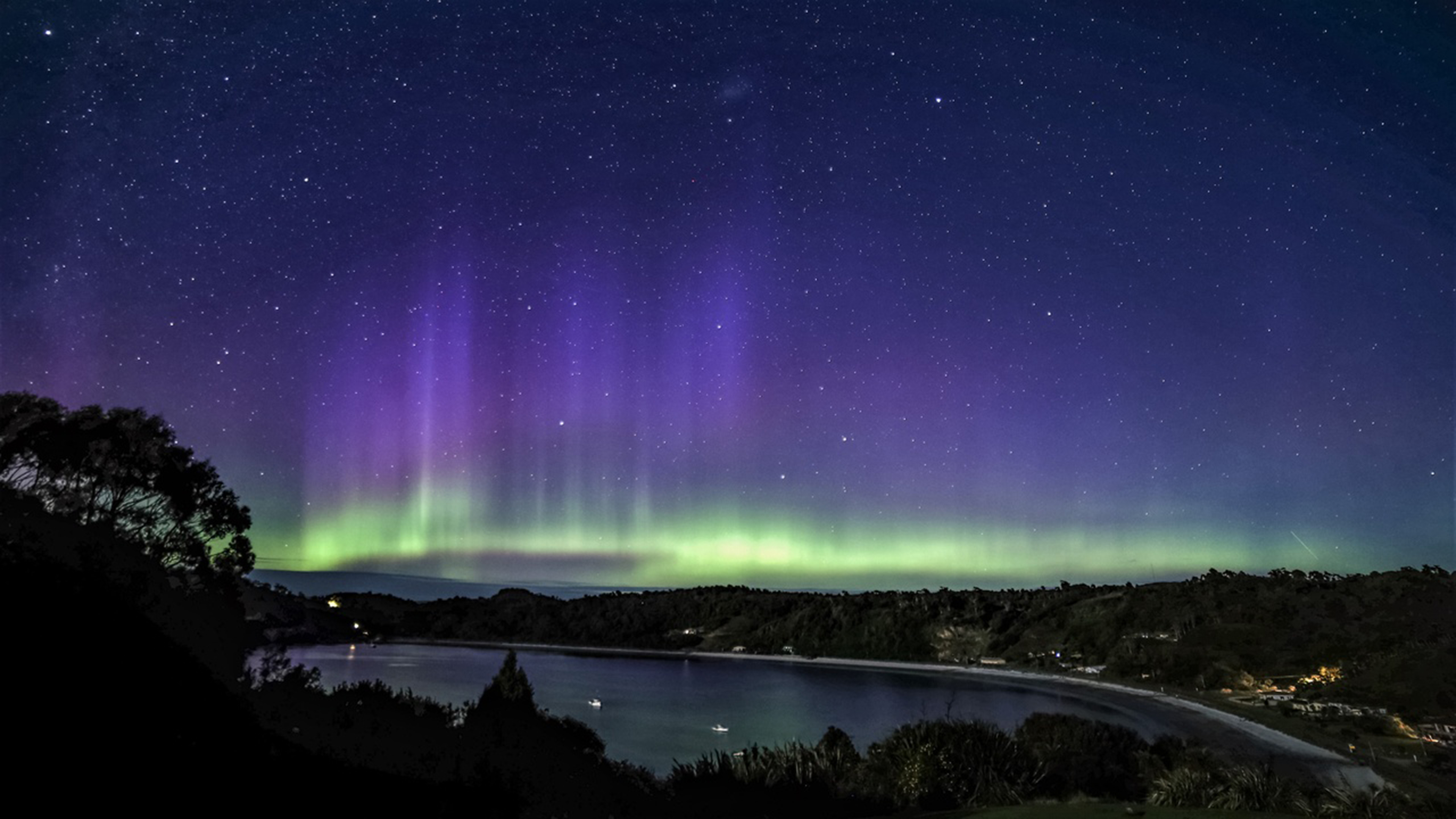
Stewart Island / Rakiura is widely regarded as one of the best places in New Zealand to see the aurora due to its southern latitude and low light pollution. Locals will tell you the island lives with the aurora. Some of the best sightings come from quiet beaches and hilltops. There are no crowds or headlights, only the sound of the ocean beneath a horizon that sometimes glows neon.
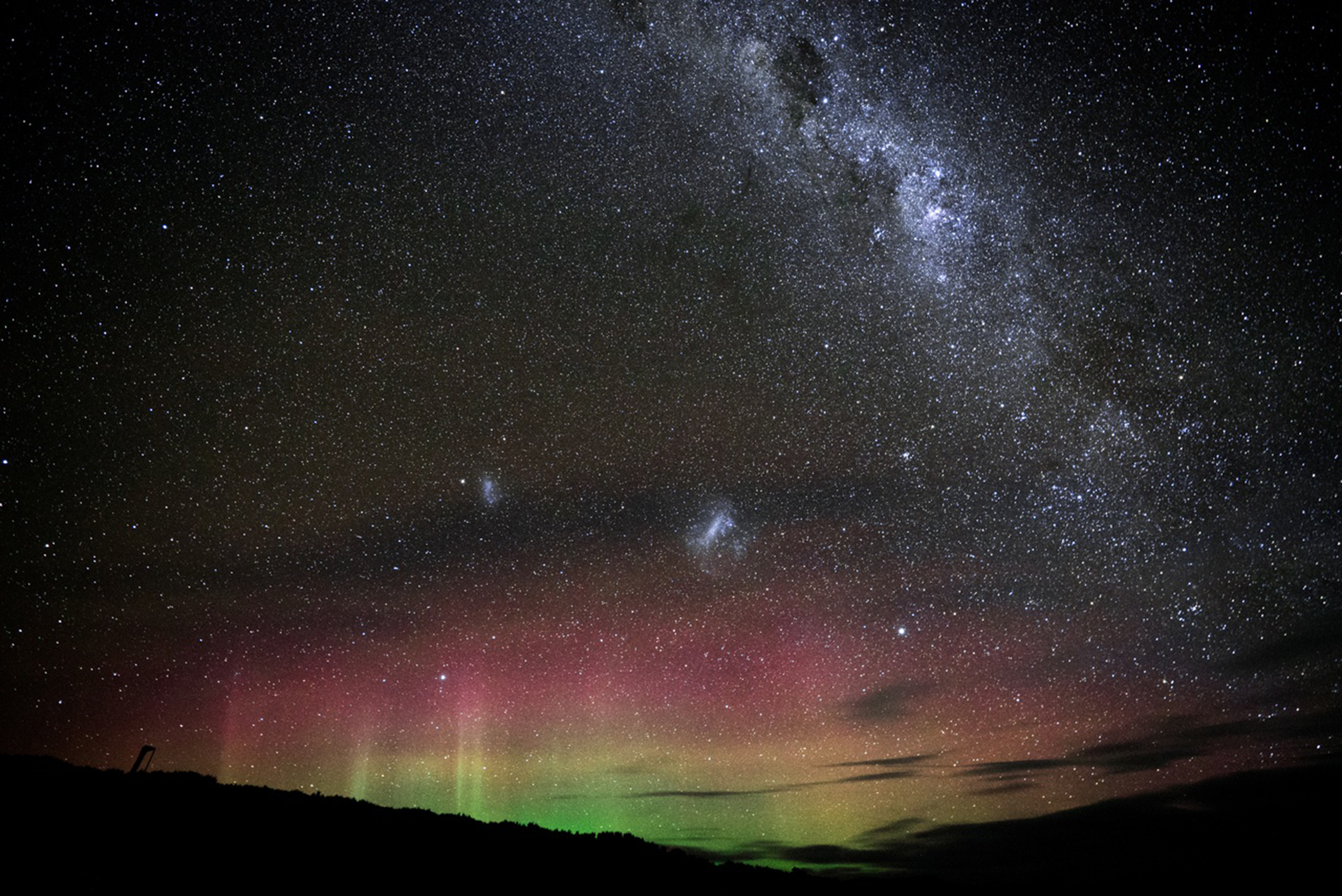
Lake Tekapo and the surrounding Aoraki Mackenzie International Dark Sky Reserve offer some of the darkest night skies in the southern hemisphere. The skies here are so clear that even faint auroral activity appears as a band of low colour on the horizon. When the Kp index (the scale used to measure geomagnetic storm activity) is strong, the southern sky brightens like a slow sunrise. Travellers often pause, unsure if they are watching a weather event or something reaching in from deep space.
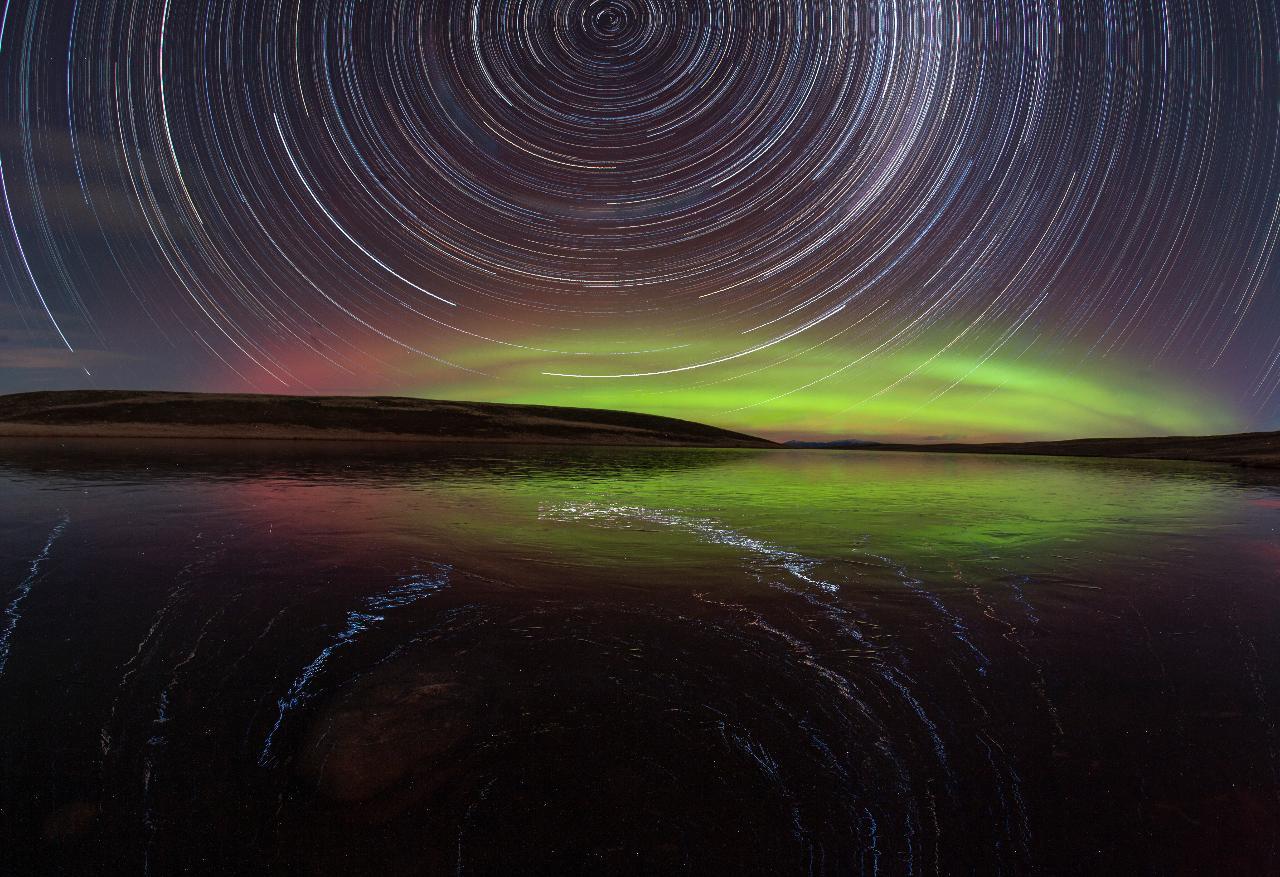
While not guaranteed, if conditions align, occasional sightings have been reported along the Otago coastline. When solar winds spike, locals gather along beaches, lookout points, and Signal Hill. On active nights with clear skies, the glow can stretch across the harbour.
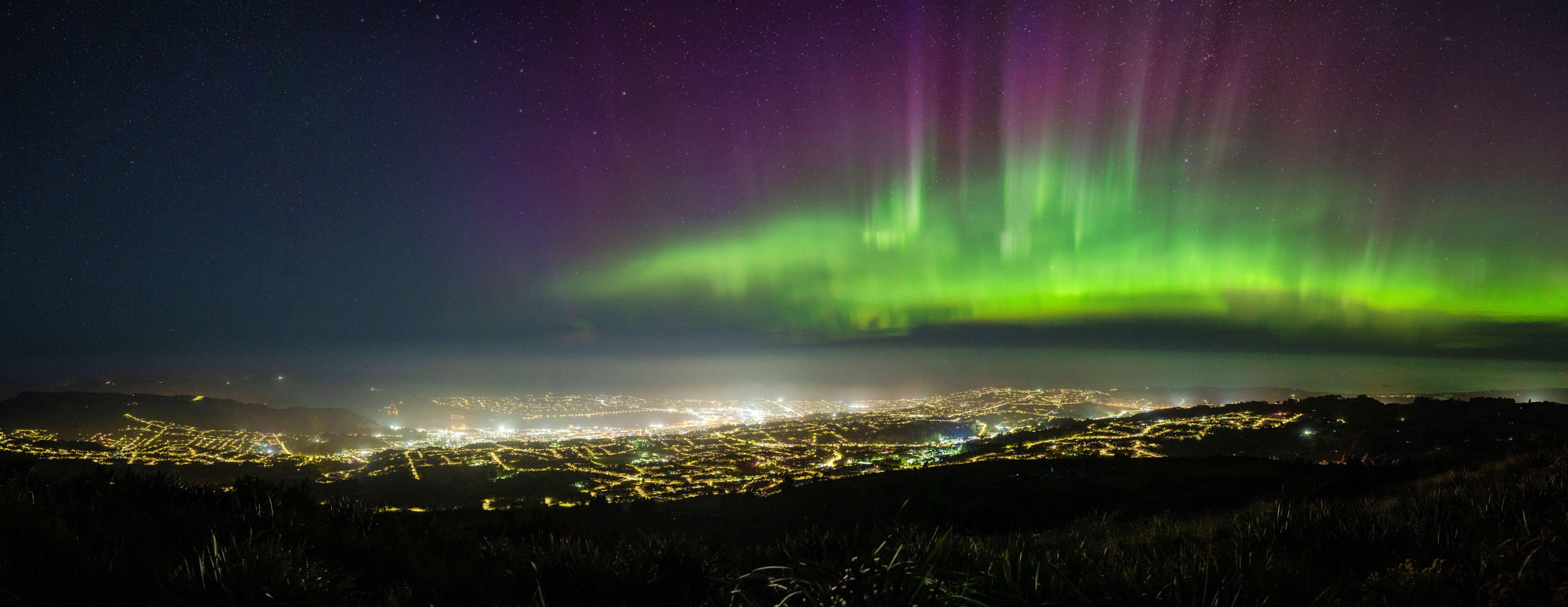
The further south you go, the wider the sky feels. The Catlins and southern coastal zones are commonly cited as good regions for aurora hunting. On quiet nights you may see nothing at all, but on active nights the entire coastline can light up in colour.

Best Time to See the Southern Lights in New Zealand
The aurora has no timetable, but your chances increase when the right conditions align.
- Best months: March to September.
- Best conditions: Clear skies, minimal light pollution, and low moonlight.
- Key factors: Solar activity (Kp index), weather, and moon phase.
Locals often rely on aurora forecast apps, trackers, and space-weather alerts. But part of the experience is the waiting. It is that quiet hour when nothing seems to happen until suddenly everything does.
What an Aurora Night Actually Feels Like
It usually begins with cold hands. You look up at the stars because there is nothing else to look at, and your eyes fall into the Milky Way like it is the only light left in the world.
Then someone whispers, “Is that it?”
And there it is: faint and low, barely visible at first. A minute later it spreads. Five minutes after that, it shifts colour.
Sometimes it becomes a full sky show. Other times it dances briefly and slips away like a secret.
Even the softer displays stay with you: the glow, the quiet, the feeling that you witnessed something ancient.
Guiding the Gaze: How Stargazing Tours Improve Your Experience
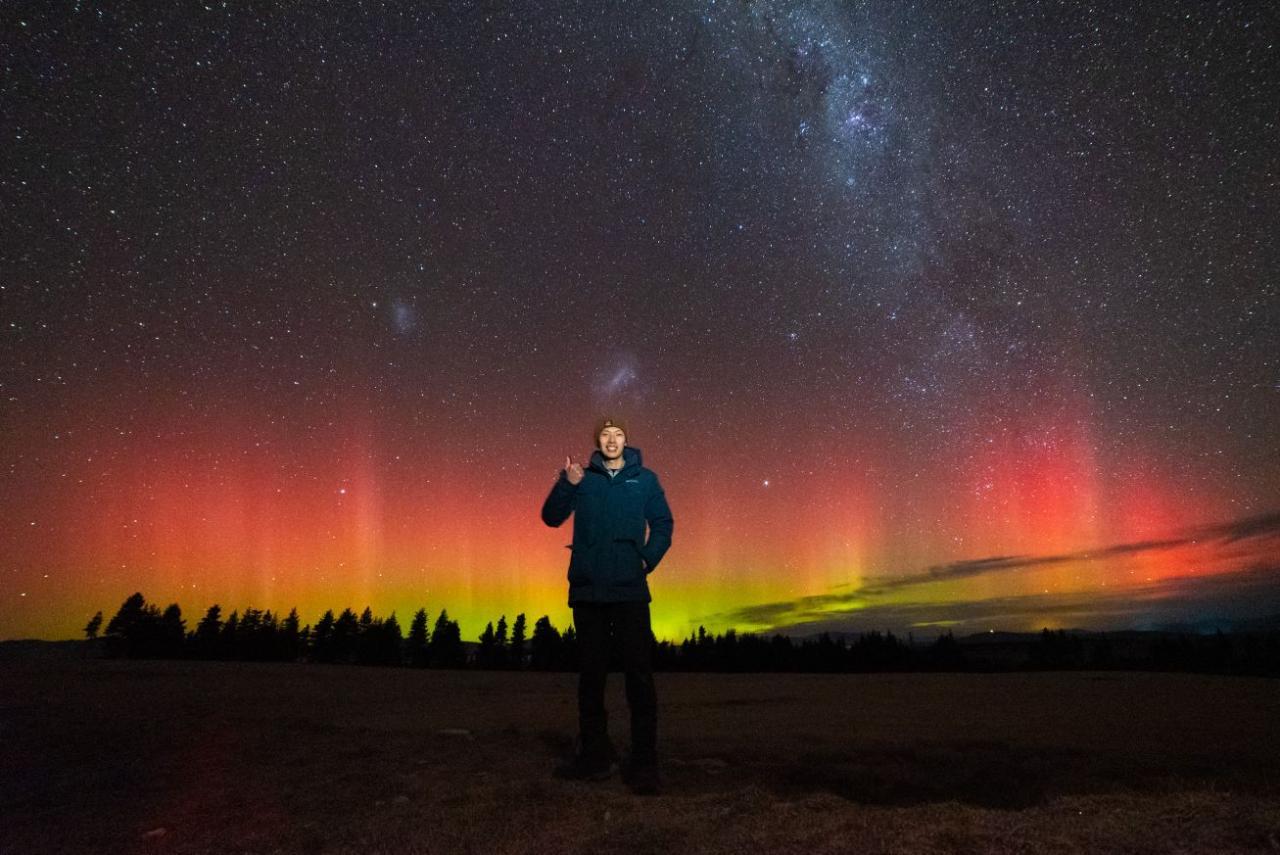
The aurora is a bonus, not a guarantee. That is why joining a dedicated night-sky tour can be valuable. These tours take you to the darkest locations and provide expert guides and equipment. Even on nights when the aurora rests, the Milky Way alone makes the experience worthwhile.
Top Stargazing Tours That Can Enhance Your Aurora Hunt
- Twizel Stargazing: Remote, low-light viewing areas ideal for unexpected activity.
- The Alpine Experience (Tekapo): Located within the Aoraki Mackenzie International Dark Sky Reserve.
- The Ultimate Experience (Tekapo): Premium small-group stargazing with high-end telescopes.
- Manuka Skies (Hanmer Springs): Cultural storytelling combined with powerful optics.
- Kaikōura Night Zipline: A rare chance to combine adventure and stargazing from elevated viewpoints.
If the aurora appears during a tour, it becomes the moment guests remember for years. If it does not, the night sky still feels like its own reward.
Why Travellers Fall in Love With the Southern Lights
Most people expect colour. What surprises them is the emotion.
The aurora is not loud the way people imagine. It builds slowly. It moves gently. It creeps across the edge of the world like someone turning a page.
If you see it, it becomes one of those New Zealand moments that does not feel like travel anymore. It feels like memory.
Frequently Asked Questions
March to September, when nights are longer and darker.
Note: The Aurora Australis in NZ is sporadic and unpredictable. Even the best locations and time offer a chance, not a guarantee.
Yes. During strong geomagnetic storms, the aurora is visible as a pale glow that may shift into pinks and greens. Cameras will always show more colour than the eye.
The further south you go, the better: Stewart Island (Rakiura), Lake Tekapo, The Catlins, and Dunedin.
Note: The Aurora Australis in NZ is sporadic and unpredictable. Even the best locations and time offer a chance, not a guarantee.
No, but joining a stargazing experience in a Dark Sky Reserve improves your comfort, safety, and viewing conditions.