

New Zealand's Great Rides are graded from 1 to 5. Grade 1 is the easiest and suits all riders, including families. Grade 2 is easy and suits beginners. Grade 3 is intermediate and suits reasonably fit and capable riders. Grades 4 and 5 are for fit, experienced cyclists with strong off-road skills. For a first cycling holiday, choose a grade 1 or grade 2 trail.
The grades come from Ngā Haerenga New Zealand Cycle Trails, the body behind the 23 Great Rides. They line up with the system used by the Department of Conservation and Mountain Biking New Zealand.
A trail grade tells you what to expect from a section of trail: its surface, climbs and technical features. Many Go New Zealand tour pages list a trail grade. When comparing tours, also check how far you ride each day and whether there is a shorter or easier option.
How do the five trail grades compare?
| Grade | Name | Who it suits | Surface and obstacles | Climbs and descents | Recommended bike |
| 1 | Easiest | All riders, including families | Smooth, firm gravel or sealed. Wide enough to ride side by side. | Gentle climbs only | Most bikes, including e-bikes, hybrids and children's bikes. |
| 2 | Easy | Most riders, including beginners and occasional cyclists | Mostly wide and smooth. Firm gravel or sealed. | Some gentle hills | A bike with gears and medium to wide knobbly tyres |
| 3 | Intermediate | Reasonably fit and capable riders | Mainly firm. Can be narrow, with loose or muddy sections, rocks, tree roots, steep drop-offs and small river crossings | Hill climbs | Mountain bike off-road. E-mountain bikes are suitable with enough battery. |
| 4 | Advanced | Fit, experienced cyclists with good off-road skills, aged over 12 | Narrow. Firm and loose sections, plenty of rocks and roots, likely mud. Obstacles you cannot ride around. | Steep climbs. You may need to walk some sections. | A quality mountain bike in good condition |
| 5 | Expert | Fit, experienced cyclists with excellent off-road skills. Not for children | Rocks, roots, ruts, dangerous drop-offs and possible hazardous river crossings | Long, steep climbs and steep descents | A quality full-suspension mountain bike |
What is a grade 1 cycle trail?
Grade 1 trails suit everyone, including families. The surface is smooth, either firm gravel or sealed. Climbs are gentle. Many grade 1 trails follow old railway lines, which were built with easy gradients.
The trail is usually wide enough to ride side by side. Any road sections tend to be on quiet roads with little traffic. You do not need much fitness or skill. Most bikes will do the job, including e-bikes and children's bikes.


Otago Central Rail Trail
Grade 1 from start to finish, on wide gravel with gentle gradients.


Hauraki Rail Trail from Auckland
Almost all grade 1, with a grade 1 to 2 section through the Karangahake Gorge. An e-bike day tour from Tāmaki Makaurau Auckland rides it.


Hawke's Bay Wine & Bike Tours
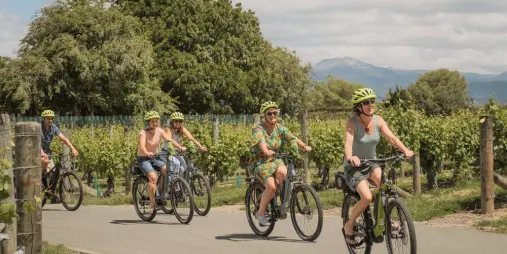
The Hawke’s Bay Trails are mainly grade 1 to 2, on flat paths between wineries.
What is a grade 2 cycle trail?
Grade 2 trails suit most riders. That includes beginners, people who only ride now and then, and families without much cycling experience. The trail is mostly wide and smooth, with some gentle hills.
You can usually ride two abreast. A bike with gears and medium to wide knobbly tyres is recommended. If you can ride a bike comfortably for a few hours, grade 2 is a good place to start.


Bannockburn Winery Tour by eBike
A six-hour grade 2 ride from Cromwell to Carrick Winery.


West Coast Wilderness Gold
Four days on a trail that is mostly grade 2, with some grade 3 road sections. There is also a three-day tour on the same trail.


Great Taste Trail day tours
The coastal sections from Whakatū Nelson to Māpua and Motueka are grade 2. The Nelson to Mapua Adventure by eBike rides the first of them.
What is a grade 3 cycle trail?
Grade 3 trails suit reasonably fit and capable riders. Children should ride with an adult.
The surface is mainly firm, but expect some loose or muddy sections, rocks and tree roots. Off-road trails can be narrow. There may be hills, steep drop-offs and small river crossings. Road sections can carry up to 1,000 vehicles a day.
A mountain bike is recommended for off-road riding.


7 Day Alps 2 Ocean Express
Seven days of grade 2 to 3 riding from the Southern Alps to Ōamaru. More options are on the Alps 2 Ocean Bike Tours page.


3 Day Three Gorges Supported Cycling Tour from Queenstown
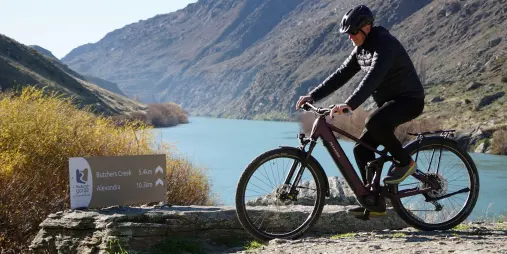
Grade 2 to 3 trails through the Kawarau Gorge and along Lake Dunstan.


4 Day Great Taste Trail Delight Self-Guided Cycle Tour
The full loop from Whakatū Nelson. Three days are grade 1 to 2. Day two, from Tapawera to Riuwaka, is grade 3.


Remutaka Cycle Trail Tours
Mostly grade 2 to 3 riding from Te Whanganui-a-Tara Wellington, with one harder section on the Wild Coast.
What is a grade 4 cycle trail?
Grade 4 trails are for fit, experienced cyclists. You need high fitness and strong bike-handling skills. The official guidance is for riders over 12, with children accompanied by an adult.
Expect narrow trails, steep climbs and obstacles you cannot ride around. The surface mixes firm and loose sections, with plenty of rocks and roots. Mud is likely. You may need to get off and walk in places. A quality mountain bike in good condition is recommended.


3 Day Three Gorges Supported Cycling Tour from Queenstown
Has an optional grade 4 section, the Hugo Tunnel stretch of the Shotover Gorge Trail. The rest is grade 2 to 3.


Remutaka Cycle Trail Tours
The Wild Coast section from Ocean Beach to Orongorongo is grade 3 to 4. The two-day and three-day tours offer a pick-up at Ocean Beach for riders who want to skip it.


3 Day Queen Charlotte Track Independent Mountain Bike Trip.
The track is 62% grade 3, 28% grade 4 and 10% grade 5. It suits experienced single-track mountain bikers.
What is a grade 5 cycle trail?
Grade 5 trails are for fit, experienced riders with strong off-road skills. They are not suitable for children. Expect long, steep climbs, steep descents and dangerous drop-offs. River crossings can be hazardous. A quality full-suspension mountain bike is recommended.
There is very little grade 5 riding on the Great Rides. A few short sections appear on the Queen Charlotte Track, The Old Ghost Road and the St James Cycle Trail. There are no grade 6 trails on the Great Rides at all.
One place to meet a grade 5 section is the 1 Day Mountain Bike QCT Torea Saddle to Anakiwa ride. Most of that section is grade 3. The opening climb from Torea Saddle is grade 5, and many riders get off and push. Riders can skip it on the easier Kenepuru Road route, an optional road ride of about one hour.
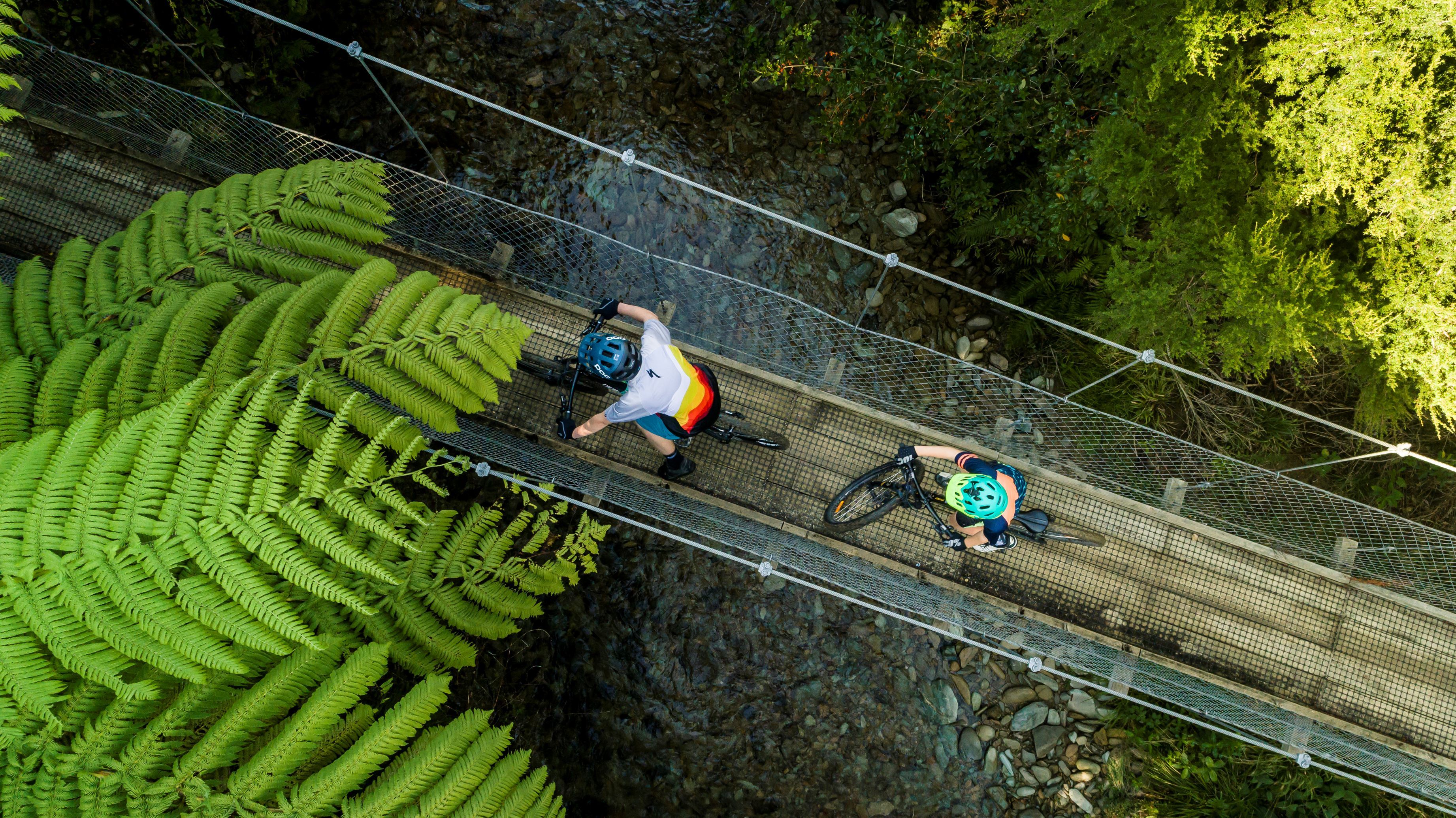
Why can one trail have several grades?
A long trail rarely has one grade from start to finish. A single section can even span two or three grades. Be ready for the hardest section you plan to ride.
Each Great Ride page on the New Zealand Cycle Trails website shows a grade wheel. It gives the rough share of the trail at each grade. A trail might be mostly grade 2 with a short grade 3 stretch, for example.
The Remutaka Cycle Trail is a good example. It starts at grade 2 near Days Bay and reaches grade 3 to 4 on the Wild Coast. Each section is listed in What grade is the Remutaka Cycle Trail?
A longer tour does not change the grade of a section. It changes how far you ride each day.
Does an e-bike change the trail grade?
An e-bike helps with hills and distance. It does not change the trail surface, the width or the skill you need. A grade 3 trail is still grade 3 on an e-bike.
On grade 1 and 2 trails, e-bikes are a comfortable choice for most riders. On grade 3 and above, the official advice is that e-mountain bikes are suitable on two conditions. The battery must last the day, and you must be able to finish the trail if it fails.
Many tours offer an e-bike upgrade. Each tour page lists the bike options.
Which trail grade should you choose?
- Pick for the least experienced rider. Choose a trail that suits everyone in your group.
- Be honest about recent riding. If you have not ridden for a few years, start at grade 1 or 2.
- Check the daily distance too. The grade describes the trail, not the length of the day. A grade 2 day of 60 km can be more tiring than a short grade 3 ride.
- Think about the bike. An e-bike makes hills and long days easier. It does not make a technical trail less technical.
- Ask if you are unsure. Contact the Go New Zealand team and say how often you ride. They can match you to a tour.
Every ride is listed on the Cycle Tours & Trails page. For bike hire only, see Cycle Hire.